1) Plan your main flash - this is the main cover story that links to your central image.
'the meaning behind the music'
2) Plan the image you will need for the cover - model, costume, make-up, lighting etc. At this point, simply describe the image you need to capture.
female model, mostly black outfit, looking directly at the camera, natural/serious expression - not smiling, show power and confidence.
3) Write the cover lines and any additional text you need for your magazine cover.
'up and coming artists you need to follow'
'50 greatest throwback songs
4) Sketch out your cover on plain A4 paper using your written planning. Take a photo of your sketch and embed it in your blogpost.
Monday, 30 April 2018

Monday, 23 April 2018
Magazine practical task research
1) Use your lesson notes on magazine genres and conventions to view a range of potential magazine covers. Create a shortlist of three potential magazines and embed an example front cover from each one.


2) Select your chosen magazine to create a new edition for and explain the thinking behind your choice.
i chose to do the rolling stone as it successfully uses key conventions of a magazine and i like that the background and main subjects outfit are quite monochrome, so that the main focus is on the cover star. Although there are quite a few different straplines on some of their covers there arent too many so the cover doesnt look too busy, so the reader can focus on all aspects on the cover.
3) Find three different front covers for your chosen magazine and embed them in your blogpost. Analyse the fonts, colours and typical design. What is the language or writing style? How are the cover lines presented? You need to become an expert in the design and construction of this magazine and its branding.
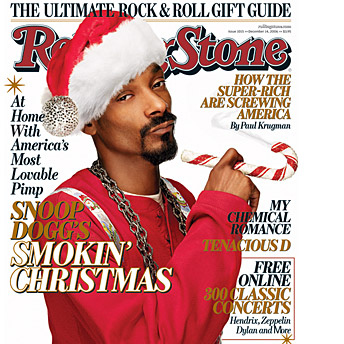

2) Select your chosen magazine to create a new edition for and explain the thinking behind your choice.
i chose to do the rolling stone as it successfully uses key conventions of a magazine and i like that the background and main subjects outfit are quite monochrome, so that the main focus is on the cover star. Although there are quite a few different straplines on some of their covers there arent too many so the cover doesnt look too busy, so the reader can focus on all aspects on the cover.
3) Find three different front covers for your chosen magazine and embed them in your blogpost. Analyse the fonts, colours and typical design. What is the language or writing style? How are the cover lines presented? You need to become an expert in the design and construction of this magazine and its branding.
-masthead partly covered by main subject/cover star
-3 main colours
-focus on beauty, hair, fashion
-women empowerment
-feminism
-names/main topics in bigger font and brighter colour
Saturday, 21 April 2018
Advertising: End of Unit Index
1) Introduction: narrative in advertising
2) Advertising: persuasive techniques
3) Advertising: the representation of women in advertising
4) Advertising: Score case study and wider reading
5) Advertising: Maybelline case study and wider reading
6) Advertising: Gauntlett - Media, Gender and Identity reading and questions
2) Advertising: persuasive techniques
3) Advertising: the representation of women in advertising
4) Advertising: Score case study and wider reading
5) Advertising: Maybelline case study and wider reading
6) Advertising: Gauntlett - Media, Gender and Identity reading and questions
Friday, 13 April 2018
Advertising: Gauntlett - Gender, identity and advertising
Read this extract from Media, Gender and Identity by David Gauntlett. This is another university-level piece of academic writing so it will be challenging - but there are some fascinating ideas here regarding the changing representation of men and women in the media. If you can't access David Gauntlett's website, the text is also available here.
1) What examples does Gauntlett provide of the "decline of tradition"? How can we link our advertising CSPs (Score hair cream and Maybelline 'That Boss Life') to this idea?
the typical role/representation of women has changed a lot in the last 50 years, as the media has focused on 'girl power', moving away from the traditional idea that women are just meant to be the housewives. Meanwhile the masculine ideals of absolute toughness, stubborn self-reliance and emotional silence have been shaken by a new emphasis on men's emotions, need for advice, and the problems of masculinity. Although gender categories have not been shattered, these alternative ideas and images have at least created space for a greater diversity of identities.
2) How does Gauntlett suggest the media influences the way we construct our own identities?
Popular media fosters the desire to create new modes of life - within the context of
capitalism. Whether one is happy with capitalism, or seeks its demise, it must surely be considered
good if modern media is encouraging the overthrow of traditions which kept people within limiting
compartments.
3) How do the two CSPs reflect the generational differences that Gauntlett discusses? Is it a good thing that the media seems to promote modern liberal values?
The two CSPs reflect generational differences as they both depict masculinity and what it means to be a man/typical male attributes in two very different ways. the score hair cream advert represents men as the dominant sex which can be seen through the image of weaponry as he is holding a gun in his hand whilst being surrounded by women who are looking and reaching up to him, ultimately showing that he is in a higher position, physically and contextually. this is in contrast to the maybelline advert where they portray an unconventional representation of men by using social influencer MannyMua - an openly gay man who expresses his interest in beauty. this acknowledges gender fluidity, steering away from the traditional view that mens masculinity is defined by strength or power.
4) Why might Manny and Shayla be a good example of the role models that Gauntlett discusses - and also demonstrate how those role models have changed in recent years?
Manny and Shayla are opinion leaders meaning they make their own personal decisions and dont let others dictate what they do, which sets a good example for their audiences as they are often inspired to be like them as they are considered as role models. More of a representation of minority groups in the media has been seen in the past couple of years compared to times of a more traditional society - this agrees with Gauntlett's idea that identity is becoming more fluid and how more and more people are beginning to look up to people who are inclined to being their self.
5) Why does the Score hair cream advert provide such a good example of traditional masculinity? How can you link this to Gauntlett's discussion of whether masculinity is in crisis?
it is a good example of traditional masculinity as it was created during a time period where traditional views were widely spread in society and the score hair cream advert in particular portrays this as it shows how men were expected to be the dominant sex who hold majority of power and were the breadwinners, while women were there to sexually appeal to the man and satisfy there needs and desires by being a good housewife.
6) Gauntlett consistently argues that masculinity is not in crisis. Can the Maybelline 'That Boss Life' advert be used as evidence of this?
it can, as although it doesnt portray the traditional views of masculinity, it doesnt try to force viewers to completely change their views, and instead acknowledges and embraces the fact that masculinity doesnt come in one fixed form and recognises that gender fluidity is increasing and is not a negative thing in society.
7) Does advertising still reinforce the "conventionally rugged, super-independent, extra-strong macho man" that Gauntlett discusses? Offer examples for both sides of the argument from the wider advertising industry.
some advertisements still portray this conventional representation of men, such as in perfume adverts, where men are often seen to be muscly, strong macho men who match the traditional ideas that were frequently seen around 50 years ago. on the other hand, although this is still often shown in advertising, new media is beginning to drift from this idea and acknowledging other genders and representing unconventional representations of men, such as big beauty companies like cover girl and maybelline who are using social influencers in their adverts, including the likes of MannyMua and James Charles, shedding a positive light on them that advertisments typcially wouldnt of done in the past.
8) Gauntlett discusses the idea of 'girl power' and offers examples from music and film. Does advertising provide evidence to support the idea of 'girl power' or is the industry still reinforcing traditional representations of men and women?
Twenty or thirty years ago, analysis of popular media often told researchers that mainstream culture was a backwards-looking force, resistant to social change and trying to push people back into traditional categories. Today, it seems more appropriate to emphasise that, within limits, the mass media is a force for change. The traditional view of a woman as a housewife or low-status worker has been kick-boxed out of the picture by the feisty, successful 'girl power' icons. Meanwhile the masculine ideals of absolute toughness, stubborn self-reliance and emotional silence have been shaken by a new emphasis on men's emotions, need for advice, and the problems of masculinity. Although gender categories have not been shattered, these alternative ideas and images have at least created space for a greater diversity of identities. Modern media has little time or respect for tradition. The whole idea of traditions comes to seem quite strange.
9) Do you agree with Gauntlett's argument under 'Popular feminism, women and men' where he suggests that younger generations are not threatened by traditional gender roles and are comfortable with social changes? Does advertising (and our CSPs in particular) provide examples either reinforcing or challenging this idea that younger generations are more comfortable with changing gender roles?
I strongly agree with Gauntlett's argument where he suggests that younger generations are not threatened by traditional gender roles and are comfortable with social changes as these things are beginning to shape our new generation, helping to make younger generations feel more confident as individuals. The Maybelline 'That Boss Life' advertisement reinforces this idea through the use of MannyMua who although is gay and a male who wears makeup and still has a large fan base as well as being widely influential to his viewers which is evident as he has a large following who constantly show their support and admiration.
10) How do the two advertising CSPs show the changing 'diversity of sexualities' that Gauntlett suggests?
the Maybelline advert shows the changing 'diversity of sexualities' that Gauntlett suggests because it illustrates Manny as someone who goes against traditional male gender roles due to him being a gay male. In contrast, the Score hair cream was an advert from 1967 and in that time period the media reinforced traditional gender roles.
11) What examples from advertising does Gauntlett provide for the changing nature of gender in society (from the section on Judith Butler's Gender trouble)?
'Some advertising - such as the sexually charged but androgynous imagery promoting the CK One fragrance 'for a man or a woman' - had reminded viewers of the similarity of genders, hinting that it wouldn't matter which of the attractive male or female models you chose to desire. Other ads (such as ones for Impulse deodorant and Kronenbourglager) playfully teased heterosexual desires only to reveal that the lust object was more interested in their own sex, pointing audiences to the unpredictability of sexualities'
12) How can the Maybelline 'That Boss Life' advert be applied to Judith Butler's work on 'gender trouble'? ("The binary division of 'male' and 'female' identities should be shattered, Butler suggested, and replaced with multiple forms of identity...")
The Maybelline advert can be linked with Judith Butlers idea of gender being replaced with multiple forms of identity because in this advert we have Manny Gutierrez, a male who is gay and applies make up. This highlights how there can be a different construct of masculinity. These have created liminal spaces between the traditional gender constructs. Instead of the traditional roles of male and females in gender, Gutierrez' representation is a new form of gender is a new 'performance' that represents a large demographic that is otherwise alienated in mass advertising
13) How can our two advertising CSPs be used to argue that power has shifted from media institutions to audiences? (Clue: how did Manny and Shayler from the Maybelline advert first become famous?)
The Maybelline 'that Boss Life' advert supports the argument that power has been shifted from media institutions to audiences as brands are starting to use influencers with large followings as their brand ambassadors, showing that audiences have more power than they used to.
14) Why is advertising such a good example of the 'contradictory elements' that Gauntlett discusses with regards to the mass media? In other words, how does advertising continue to both reinforce and challenge gender stereotypes?
The mass media like magazines give a wide range of views from all types of individuals in the modern day. But these stars or role models tell us to 'be yourself', while the advertising is giving us a view of what we should aspire to be like.
15) Finally, Gauntlett makes a clear case that things change and modern identities are increasingly fluid. How do our advertising CSPs demonstrate the changing attitudes towards gender and sexuality in society?
Brands who target an older audience tend to stick to traditional ways of advertising, by using celebrities (such as actors/actresses) because they think it's what their audience want. They're less likely to follow trends, especially those set by younger people. Brands that target a younger audience aren't afraid of doing that, because they know they're audience are going to appreciate it.
1) What examples does Gauntlett provide of the "decline of tradition"? How can we link our advertising CSPs (Score hair cream and Maybelline 'That Boss Life') to this idea?
the typical role/representation of women has changed a lot in the last 50 years, as the media has focused on 'girl power', moving away from the traditional idea that women are just meant to be the housewives. Meanwhile the masculine ideals of absolute toughness, stubborn self-reliance and emotional silence have been shaken by a new emphasis on men's emotions, need for advice, and the problems of masculinity. Although gender categories have not been shattered, these alternative ideas and images have at least created space for a greater diversity of identities.
2) How does Gauntlett suggest the media influences the way we construct our own identities?
Popular media fosters the desire to create new modes of life - within the context of
capitalism. Whether one is happy with capitalism, or seeks its demise, it must surely be considered
good if modern media is encouraging the overthrow of traditions which kept people within limiting
compartments.
3) How do the two CSPs reflect the generational differences that Gauntlett discusses? Is it a good thing that the media seems to promote modern liberal values?
The two CSPs reflect generational differences as they both depict masculinity and what it means to be a man/typical male attributes in two very different ways. the score hair cream advert represents men as the dominant sex which can be seen through the image of weaponry as he is holding a gun in his hand whilst being surrounded by women who are looking and reaching up to him, ultimately showing that he is in a higher position, physically and contextually. this is in contrast to the maybelline advert where they portray an unconventional representation of men by using social influencer MannyMua - an openly gay man who expresses his interest in beauty. this acknowledges gender fluidity, steering away from the traditional view that mens masculinity is defined by strength or power.
4) Why might Manny and Shayla be a good example of the role models that Gauntlett discusses - and also demonstrate how those role models have changed in recent years?
Manny and Shayla are opinion leaders meaning they make their own personal decisions and dont let others dictate what they do, which sets a good example for their audiences as they are often inspired to be like them as they are considered as role models. More of a representation of minority groups in the media has been seen in the past couple of years compared to times of a more traditional society - this agrees with Gauntlett's idea that identity is becoming more fluid and how more and more people are beginning to look up to people who are inclined to being their self.
5) Why does the Score hair cream advert provide such a good example of traditional masculinity? How can you link this to Gauntlett's discussion of whether masculinity is in crisis?
it is a good example of traditional masculinity as it was created during a time period where traditional views were widely spread in society and the score hair cream advert in particular portrays this as it shows how men were expected to be the dominant sex who hold majority of power and were the breadwinners, while women were there to sexually appeal to the man and satisfy there needs and desires by being a good housewife.
6) Gauntlett consistently argues that masculinity is not in crisis. Can the Maybelline 'That Boss Life' advert be used as evidence of this?
it can, as although it doesnt portray the traditional views of masculinity, it doesnt try to force viewers to completely change their views, and instead acknowledges and embraces the fact that masculinity doesnt come in one fixed form and recognises that gender fluidity is increasing and is not a negative thing in society.
7) Does advertising still reinforce the "conventionally rugged, super-independent, extra-strong macho man" that Gauntlett discusses? Offer examples for both sides of the argument from the wider advertising industry.
some advertisements still portray this conventional representation of men, such as in perfume adverts, where men are often seen to be muscly, strong macho men who match the traditional ideas that were frequently seen around 50 years ago. on the other hand, although this is still often shown in advertising, new media is beginning to drift from this idea and acknowledging other genders and representing unconventional representations of men, such as big beauty companies like cover girl and maybelline who are using social influencers in their adverts, including the likes of MannyMua and James Charles, shedding a positive light on them that advertisments typcially wouldnt of done in the past.
8) Gauntlett discusses the idea of 'girl power' and offers examples from music and film. Does advertising provide evidence to support the idea of 'girl power' or is the industry still reinforcing traditional representations of men and women?
Twenty or thirty years ago, analysis of popular media often told researchers that mainstream culture was a backwards-looking force, resistant to social change and trying to push people back into traditional categories. Today, it seems more appropriate to emphasise that, within limits, the mass media is a force for change. The traditional view of a woman as a housewife or low-status worker has been kick-boxed out of the picture by the feisty, successful 'girl power' icons. Meanwhile the masculine ideals of absolute toughness, stubborn self-reliance and emotional silence have been shaken by a new emphasis on men's emotions, need for advice, and the problems of masculinity. Although gender categories have not been shattered, these alternative ideas and images have at least created space for a greater diversity of identities. Modern media has little time or respect for tradition. The whole idea of traditions comes to seem quite strange.
9) Do you agree with Gauntlett's argument under 'Popular feminism, women and men' where he suggests that younger generations are not threatened by traditional gender roles and are comfortable with social changes? Does advertising (and our CSPs in particular) provide examples either reinforcing or challenging this idea that younger generations are more comfortable with changing gender roles?
I strongly agree with Gauntlett's argument where he suggests that younger generations are not threatened by traditional gender roles and are comfortable with social changes as these things are beginning to shape our new generation, helping to make younger generations feel more confident as individuals. The Maybelline 'That Boss Life' advertisement reinforces this idea through the use of MannyMua who although is gay and a male who wears makeup and still has a large fan base as well as being widely influential to his viewers which is evident as he has a large following who constantly show their support and admiration.
10) How do the two advertising CSPs show the changing 'diversity of sexualities' that Gauntlett suggests?
the Maybelline advert shows the changing 'diversity of sexualities' that Gauntlett suggests because it illustrates Manny as someone who goes against traditional male gender roles due to him being a gay male. In contrast, the Score hair cream was an advert from 1967 and in that time period the media reinforced traditional gender roles.
11) What examples from advertising does Gauntlett provide for the changing nature of gender in society (from the section on Judith Butler's Gender trouble)?
'Some advertising - such as the sexually charged but androgynous imagery promoting the CK One fragrance 'for a man or a woman' - had reminded viewers of the similarity of genders, hinting that it wouldn't matter which of the attractive male or female models you chose to desire. Other ads (such as ones for Impulse deodorant and Kronenbourglager) playfully teased heterosexual desires only to reveal that the lust object was more interested in their own sex, pointing audiences to the unpredictability of sexualities'
12) How can the Maybelline 'That Boss Life' advert be applied to Judith Butler's work on 'gender trouble'? ("The binary division of 'male' and 'female' identities should be shattered, Butler suggested, and replaced with multiple forms of identity...")
The Maybelline advert can be linked with Judith Butlers idea of gender being replaced with multiple forms of identity because in this advert we have Manny Gutierrez, a male who is gay and applies make up. This highlights how there can be a different construct of masculinity. These have created liminal spaces between the traditional gender constructs. Instead of the traditional roles of male and females in gender, Gutierrez' representation is a new form of gender is a new 'performance' that represents a large demographic that is otherwise alienated in mass advertising
13) How can our two advertising CSPs be used to argue that power has shifted from media institutions to audiences? (Clue: how did Manny and Shayler from the Maybelline advert first become famous?)
The Maybelline 'that Boss Life' advert supports the argument that power has been shifted from media institutions to audiences as brands are starting to use influencers with large followings as their brand ambassadors, showing that audiences have more power than they used to.
14) Why is advertising such a good example of the 'contradictory elements' that Gauntlett discusses with regards to the mass media? In other words, how does advertising continue to both reinforce and challenge gender stereotypes?
The mass media like magazines give a wide range of views from all types of individuals in the modern day. But these stars or role models tell us to 'be yourself', while the advertising is giving us a view of what we should aspire to be like.
15) Finally, Gauntlett makes a clear case that things change and modern identities are increasingly fluid. How do our advertising CSPs demonstrate the changing attitudes towards gender and sexuality in society?
Brands who target an older audience tend to stick to traditional ways of advertising, by using celebrities (such as actors/actresses) because they think it's what their audience want. They're less likely to follow trends, especially those set by younger people. Brands that target a younger audience aren't afraid of doing that, because they know they're audience are going to appreciate it.
Sunday, 25 March 2018
Advertising - Persuasive techniques
Persuasive techniques
Advertisements are generally trying to persuade their target audience to:
-Buy a product or service
-Believe something or act in a certain way
-Agree with a point of view
There are many persuasive techniques used in advertising. A selection include:
Slogan – a catchy phrase or statement
Repetition – constant reference to product name
Bandwagon – everyone is buying it
Testimonial/association – e.g. celebrity endorsement
Emotional appeal – designed to create strong feelings
Expert opinion – ‘4 out of 5 dentists…’
Examples:
Slogan – Just Do It
Repetition – Go Compare
Bandwagon – Maybelline ‘America’s favourite mascara’
Testimonial/association – FIFA18 ‘El Tornado’ / Ronaldo
Emotional appeal – WaterAid ‘Dig toilets not graves’
Expert opinion – Max Factor ‘The make-up of make-up artists
Case study: Marmite
Advertising: Persuasive techniques blog task
Create a new blog post called 'Advertising: Persuasive techniques'. Read ‘Marketing Marmite in the Postmodern age’ in MM54 (p62). You'll find our Media Magazine archive here.
Answer the following questions on your blog:
1) What does John Berger suggest about advertising in ‘Ways of Seeing’?
Advertising seeks to make us dissatisfied with our present selves and promotes the idea that we can buy our way to a better life. ‘All publicity works on anxiety’ suggested John Berger in his seminal book Ways of Seeing (1972). Advertising offers us an improved version of ourselves, whether we are male or female: Publicity is always about the future buyer. It offers him an image of himself made glamorous by the product or opportunity it is trying to sell.
2) What is it psychologists refer to as referencing? Which persuasive techniques could you link this idea to?
Psychologists refer to the ways that brands offer images about people as referencing. We create a vision of ourselves living this idealised lifestyle, and then behave in ways that help us to realise this vision. This is because it creates strong feelings of dissatisfaction and the advert uses the anxiety of the consumer to make their brands appear more attractive.
3) How was Marmite discovered?
The product that was to become Marmite was invented in the late 19th century when German scientist Justus von Liebig discovered that brewer’s yeast could be concentrated, bottled and eaten.
4) Who owns the Marmite brand now?
Unilever now owns the Marmite brand. Unilever is a British-Dutch transnational consumer goods company. Is products include food, beverages, cleaning agents and personal care products. Unilever's other brands include- Magnum, Dove, Sure, Persil, Ben & Jerry's and many more.
5) How has Marmite marketing used intertextuality? Which of the persuasive techniques we’ve learned can this be linked to?
Marmite has many adverts that feature characters from cartoons. One example is Marmite’s 2003 ad featuring Zippy from the children’s television programme Rainbow. Another example is a 2007 £3m campaign featuring the 1970s cartoon character Paddington Bear (watch below). This type of marketing technique links to association/celebrity endorsement.
6) What is the difference between popular culture and high culture? How does Marmite play on this?
High culture relates to the cultural value of different products, whereas popular culture also relates to the same thing, but it is for the masses rather than a select audience. Marmite plays on the idea of popular culture and high culture through their creation of "Ma'mite". This series of advert plays on the iconography associated with the royal family (e.g. the crown and the motto) , which makes their product more memorable, as audiences would remember the comical aspect of the adverts.
7) Why does Marmite position the audience as ‘enlightened, superior, knowing insiders’?
Postmodern audiences arguably understand that they are being manipulated by marketing. They
understand the conventions that are being deployed and satirised. Postmodern consumers are simultaneously aware that they are being exploited, yet also prepared to play the game – if it brings them a sense of superiority and social cache.
8) What examples does the writer provide of why Marmite advertising is a good example of postmodernism?
Due to the view of people in the post-modern world thinking that they do not get manipulated by adverts and the media due to so many different views being publicized through social media. But Marmite uses this idea of making the audiences get the aspect of 'love it or hate it' and see the knowledge of the joke for audiences to publicize their view on their love or hate of the product.
Advertisements are generally trying to persuade their target audience to:
-Buy a product or service
-Believe something or act in a certain way
-Agree with a point of view
There are many persuasive techniques used in advertising. A selection include:
Slogan – a catchy phrase or statement
Repetition – constant reference to product name
Bandwagon – everyone is buying it
Testimonial/association – e.g. celebrity endorsement
Emotional appeal – designed to create strong feelings
Expert opinion – ‘4 out of 5 dentists…’
Examples:
Slogan – Just Do It
Repetition – Go Compare
Bandwagon – Maybelline ‘America’s favourite mascara’
Testimonial/association – FIFA18 ‘El Tornado’ / Ronaldo
Emotional appeal – WaterAid ‘Dig toilets not graves’
Expert opinion – Max Factor ‘The make-up of make-up artists
Case study: Marmite
Advertising: Persuasive techniques blog task
Create a new blog post called 'Advertising: Persuasive techniques'. Read ‘Marketing Marmite in the Postmodern age’ in MM54 (p62). You'll find our Media Magazine archive here.
Answer the following questions on your blog:
1) What does John Berger suggest about advertising in ‘Ways of Seeing’?
Advertising seeks to make us dissatisfied with our present selves and promotes the idea that we can buy our way to a better life. ‘All publicity works on anxiety’ suggested John Berger in his seminal book Ways of Seeing (1972). Advertising offers us an improved version of ourselves, whether we are male or female: Publicity is always about the future buyer. It offers him an image of himself made glamorous by the product or opportunity it is trying to sell.
2) What is it psychologists refer to as referencing? Which persuasive techniques could you link this idea to?
Psychologists refer to the ways that brands offer images about people as referencing. We create a vision of ourselves living this idealised lifestyle, and then behave in ways that help us to realise this vision. This is because it creates strong feelings of dissatisfaction and the advert uses the anxiety of the consumer to make their brands appear more attractive.
3) How was Marmite discovered?
The product that was to become Marmite was invented in the late 19th century when German scientist Justus von Liebig discovered that brewer’s yeast could be concentrated, bottled and eaten.
4) Who owns the Marmite brand now?
Unilever now owns the Marmite brand. Unilever is a British-Dutch transnational consumer goods company. Is products include food, beverages, cleaning agents and personal care products. Unilever's other brands include- Magnum, Dove, Sure, Persil, Ben & Jerry's and many more.
5) How has Marmite marketing used intertextuality? Which of the persuasive techniques we’ve learned can this be linked to?
Marmite has many adverts that feature characters from cartoons. One example is Marmite’s 2003 ad featuring Zippy from the children’s television programme Rainbow. Another example is a 2007 £3m campaign featuring the 1970s cartoon character Paddington Bear (watch below). This type of marketing technique links to association/celebrity endorsement.
6) What is the difference between popular culture and high culture? How does Marmite play on this?
High culture relates to the cultural value of different products, whereas popular culture also relates to the same thing, but it is for the masses rather than a select audience. Marmite plays on the idea of popular culture and high culture through their creation of "Ma'mite". This series of advert plays on the iconography associated with the royal family (e.g. the crown and the motto) , which makes their product more memorable, as audiences would remember the comical aspect of the adverts.
7) Why does Marmite position the audience as ‘enlightened, superior, knowing insiders’?
Postmodern audiences arguably understand that they are being manipulated by marketing. They
understand the conventions that are being deployed and satirised. Postmodern consumers are simultaneously aware that they are being exploited, yet also prepared to play the game – if it brings them a sense of superiority and social cache.
8) What examples does the writer provide of why Marmite advertising is a good example of postmodernism?
Narrative theory - example questions (catch up)
How do the representations in Figure 1 position the audience to desire the Patek Phillipe watch?
-idea it makes you the ideal family man
-lasts for generations - worth the investment
-something to hand down to his son - has significant value
Four theorists we can call on when exploring narrative in media products:
-Todorov – Equilibrium
-Propp – Familiar character types
-Barthes – Enigma and action codes
-Levi-Strauss – Binary opposition
How are representations of masculinity shaped by cultural and historical contexts?
Your answers should refer to the Patek Phillipe advert (Figure 1 – published 2014) and your Close Study Product, the Score hair cream advert (Figure 2 – published 1967).
-The representation of men in these adverts are a basic stereotype of them - men are meant to be seen as a good looking, attractive and strong.
-In Patek Philips watch advert it shows how a man is meant to look after the son and make him look like he is the dominant want
-shows a man providing the family with something while the women isn't not even represented in the advert - idea that if you purchase the product all problems are solved - dont even need wife/mother figure
-Score hair cream advert it shows that the man is over looking the women showing his dominance. -The low angle shot shows that the women are below that men.
The advert is there to attract men into buy something that degrades women
Narrative in advertising: Jonah Sachs
-Todorov – Equilibrium
-Propp – Familiar character types
-Barthes – Enigma and action codes
-Levi-Strauss – Binary opposition
How are representations of masculinity shaped by cultural and historical contexts?
Your answers should refer to the Patek Phillipe advert (Figure 1 – published 2014) and your Close Study Product, the Score hair cream advert (Figure 2 – published 1967).
-The representation of men in these adverts are a basic stereotype of them - men are meant to be seen as a good looking, attractive and strong.
-In Patek Philips watch advert it shows how a man is meant to look after the son and make him look like he is the dominant want
-shows a man providing the family with something while the women isn't not even represented in the advert - idea that if you purchase the product all problems are solved - dont even need wife/mother figure
-Score hair cream advert it shows that the man is over looking the women showing his dominance. -The low angle shot shows that the women are below that men.
The advert is there to attract men into buy something that degrades women
American writer Jonah Sachs has highlighted the importance of storytelling in advertising and marketing:
“The story wars are all around us. They are the struggle to be heard in a world of media noise and clamour. Today, most brand messages and mass appeals for causes are drowned out before they even reach us. But a few consistently break through the din, using the only tool that has ever moved minds and changed behaviour – great stories.”
Women in advertising catch up (Kilbourne and Van Zoonen)
 In contemporary 21st century western media, are women still conforming to the ‘media-created woman’ for a man’s pleasure?
-in many cases yes, as one of the first things you will notice when you look at this advert is a number of women dressed in barely any clothing which would appeal to men
-on the other hand, the women go against the typical representation of women/what is expected of them as they are of a slightly older age and body types that are usually under-represented are being shown in a positive light.
How were women represented in advertising in the 1950s? The 1970s? The 1990s?
1950's - a womans purpose is to cater to and please men, men are the breadwinner - goes to work while woman is a caring housewife. 'its a mans world' - sense of ownership, women have no freedom and must do as they're told.
1970's - aimed at housewives by suggesting that buying that tin of coffee would keep their husbands pleased and if they dont keep men satisfied they will be punished.
1990's - adverts link to mulveys male gaze - idea that women are there to be sexually attractive to men, purpose is to satisfy and meet their desires.
Jean Kilbourne: Killing us softly
She has been studying the image of women in advertising for over 40 years. Her series 'killing us softly' highlighted the negative representation of women in advertising.
She went on further to make documentaries studying this issue and whether it was changing over time.
Van Zoonen
She was one of the first theorists to explicitly link gender, feminism and media studies. She is a key figure in third wave feminism alongside theorists such as Butler and McRobbie.
Looking specifically at the representation of women from 70s/80s advertisements, she questioned how much things had really changed - although women in adverts were being shown to now have jobs, their appearance was usually still the vital element.
Like McRobbie, van Zoonen was particularly interested in the pleasures female audiences took from the womens magazines that were heavily criticised by more radical 70s style feminists.
Similarly to Butler, Zoonen sees gender as negotiated and dependent on social and historical context. She suggested that the meaning of gender is a 'discursive struggle and negotiation, the outcome having far-reaching socio-cultural implications' - 1994
1950's - a womans purpose is to cater to and please men, men are the breadwinner - goes to work while woman is a caring housewife. 'its a mans world' - sense of ownership, women have no freedom and must do as they're told.
1970's - aimed at housewives by suggesting that buying that tin of coffee would keep their husbands pleased and if they dont keep men satisfied they will be punished.
1990's - adverts link to mulveys male gaze - idea that women are there to be sexually attractive to men, purpose is to satisfy and meet their desires.
Jean Kilbourne: Killing us softly
She has been studying the image of women in advertising for over 40 years. Her series 'killing us softly' highlighted the negative representation of women in advertising.
She went on further to make documentaries studying this issue and whether it was changing over time.
Van Zoonen
She was one of the first theorists to explicitly link gender, feminism and media studies. She is a key figure in third wave feminism alongside theorists such as Butler and McRobbie.
Looking specifically at the representation of women from 70s/80s advertisements, she questioned how much things had really changed - although women in adverts were being shown to now have jobs, their appearance was usually still the vital element.
Like McRobbie, van Zoonen was particularly interested in the pleasures female audiences took from the womens magazines that were heavily criticised by more radical 70s style feminists.
Similarly to Butler, Zoonen sees gender as negotiated and dependent on social and historical context. She suggested that the meaning of gender is a 'discursive struggle and negotiation, the outcome having far-reaching socio-cultural implications' - 1994
Subscribe to:
Posts (Atom)
-
What type of text is it? This comes under more than one category as it is typically known to come under a print as it is a media cover ho...
-
Semiotics Icon Index Symbol Why are icons and indexes so important in media texts? Icons ...
-
Psychographic Group: Succeeders Names: Brian And Isabella Occupation: Brian - Owner/CEO of a Stock Exchange Business Isabella ...

